AEO for Law Firms
Win the best [practice area] lawyer near me answers, where the AI response now stands between a potential client and a consultation.
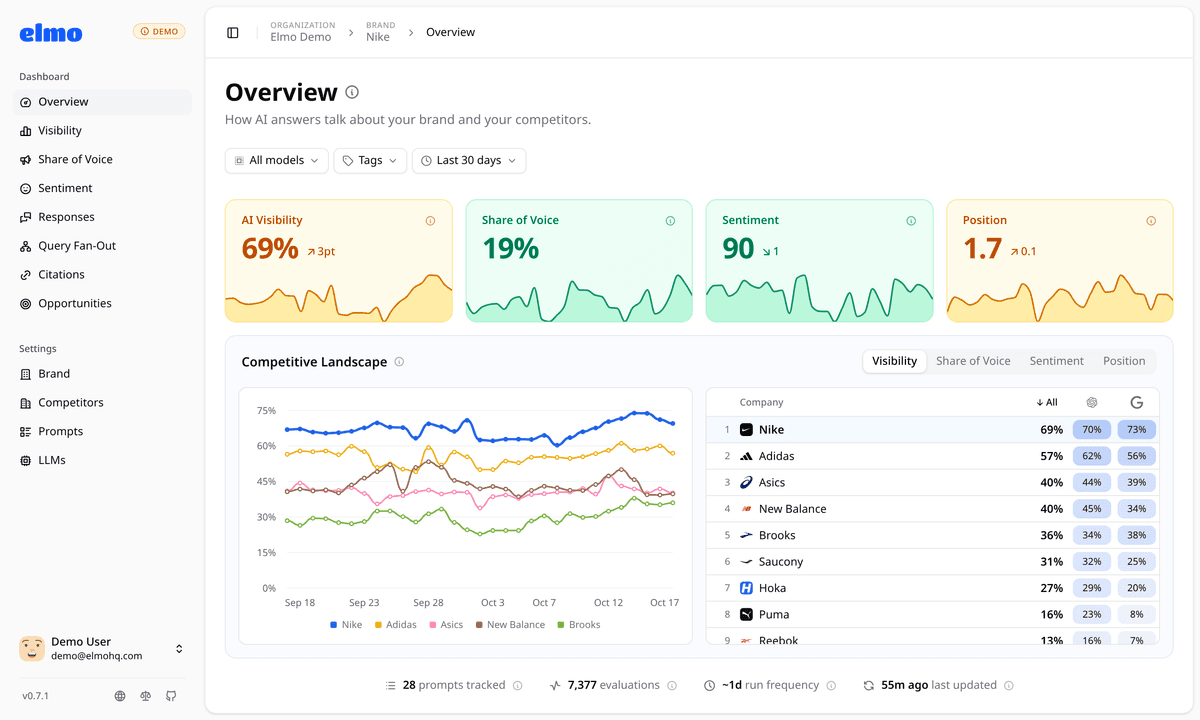
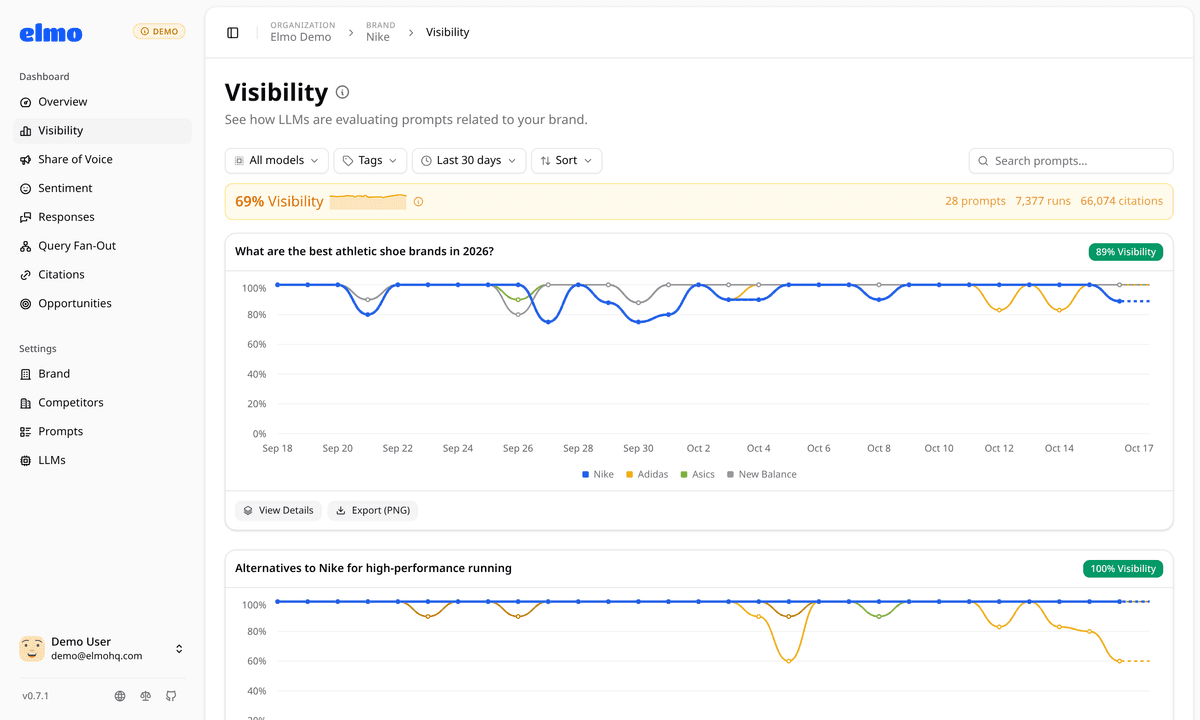
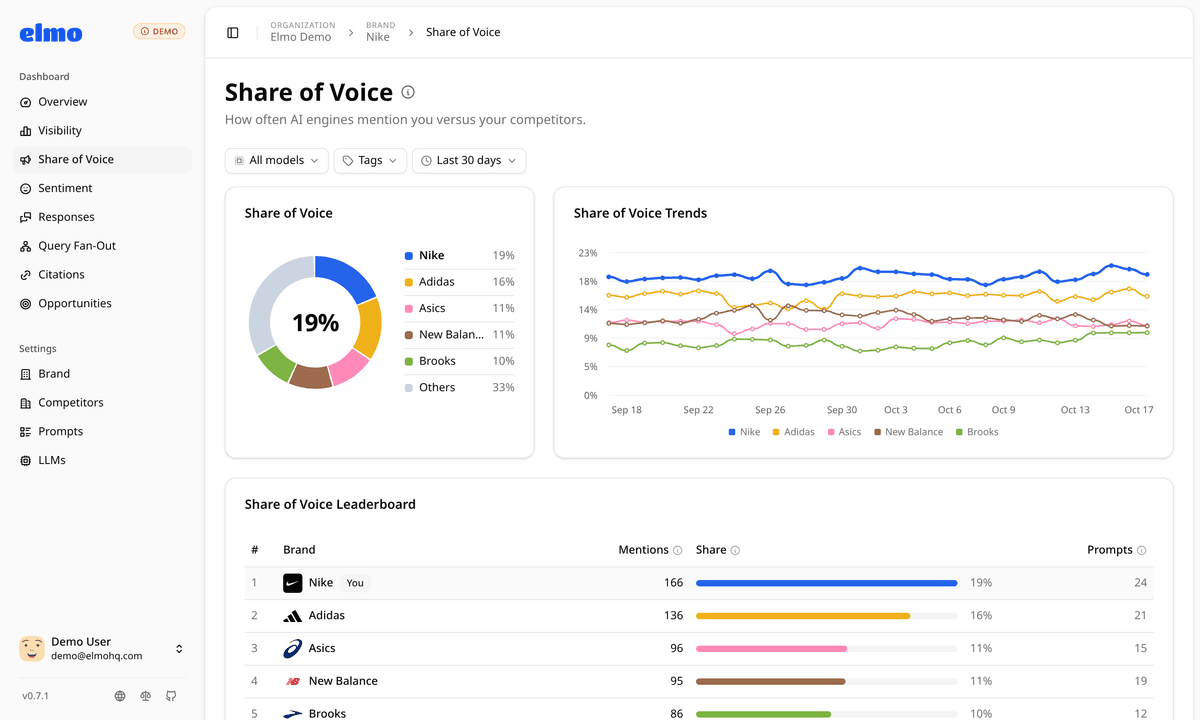
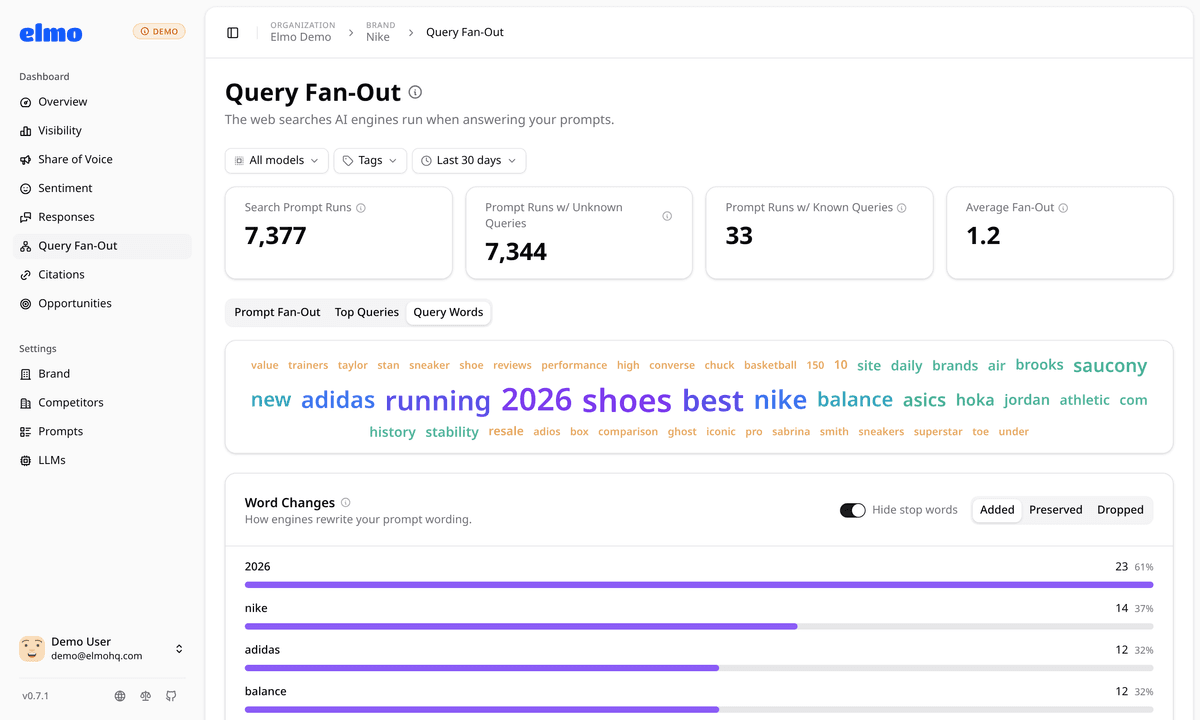
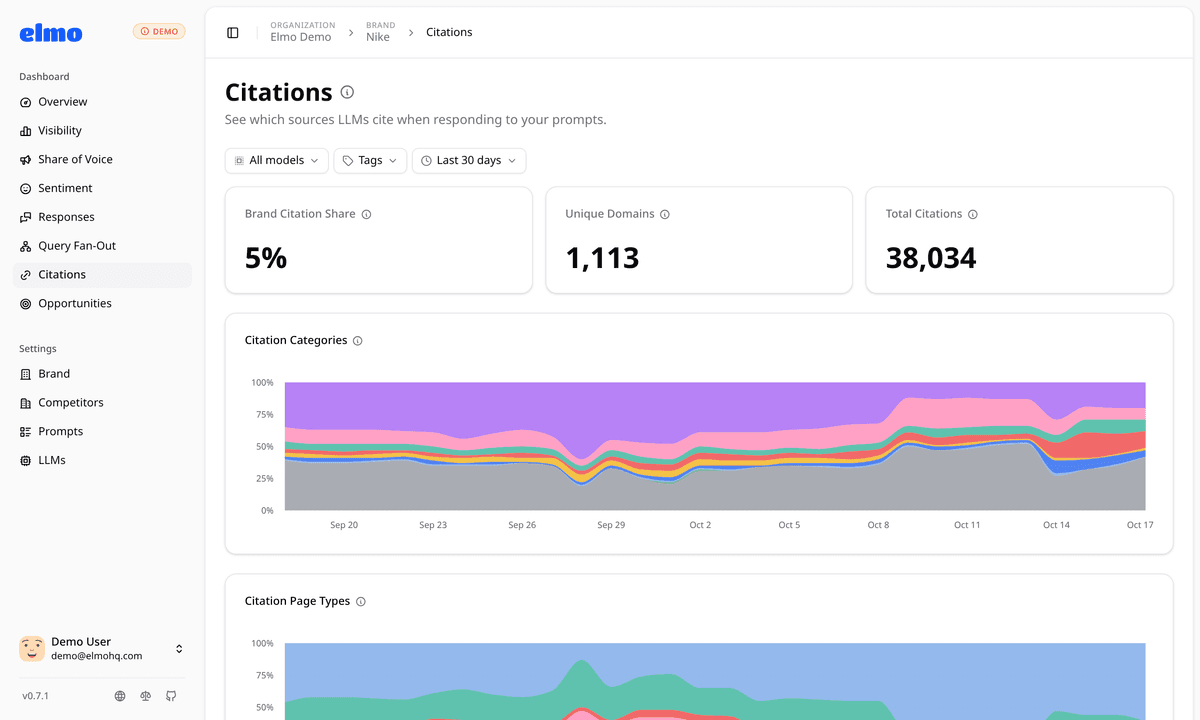
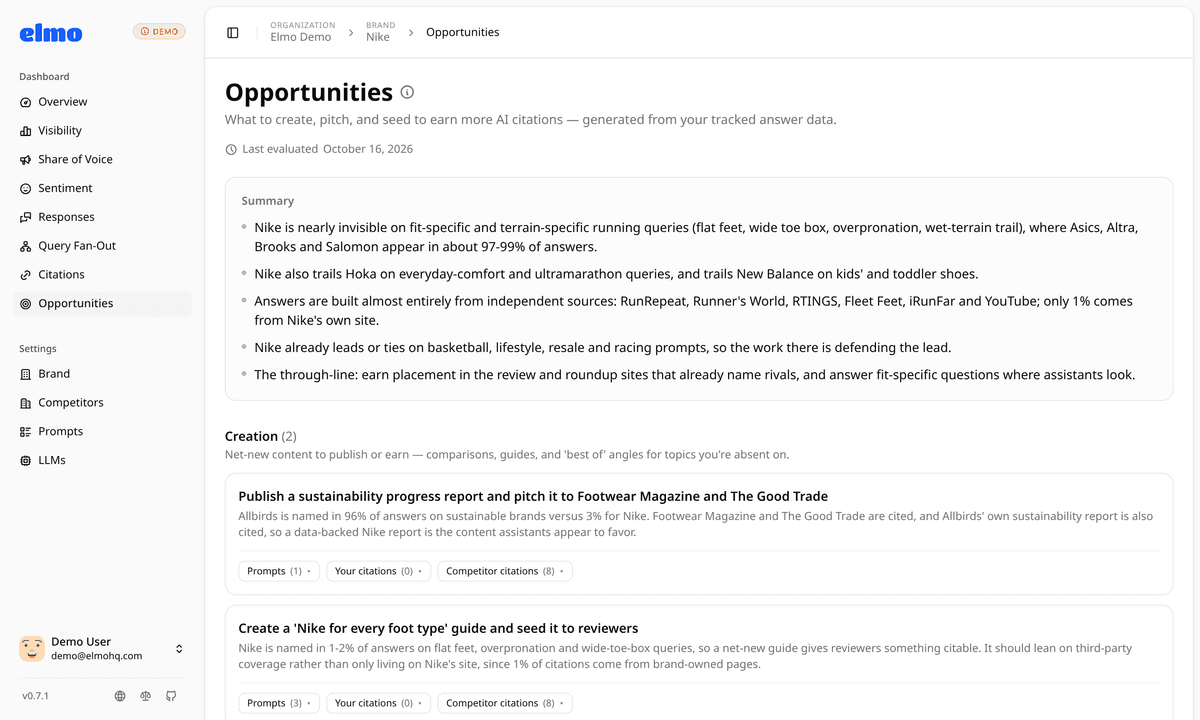
Overview. Your AI visibility and share of voice at a glance.
Used by 200+ brands to optimize their AI visibility



Your buyers are asking AI. Is it naming you?
Legal intent has always been urgent and local. Someone injured last week does not browse ten firm websites; they ask one question and act on the answer. That question now goes to ChatGPT or an AI Overview as often as to a search box, and the response names two or three firms.
Legal queries also sit squarely in what Google calls Your Money or Your Life territory, which means engines weight credentials, jurisdiction, and verifiable authorship harder here than almost anywhere else. That cuts both ways: the bar is higher, but a firm that publishes attributed, jurisdiction-specific answers is far more citable than a competitor running generic practice-area boilerplate.
Prompts law firms should track
- best [practice area] lawyer in [city]
- do I have a case for [situation]
- how much does a [practice area] attorney cost
- [firm name] reviews
- ChatGPT
- Claude
- Gemini
- Perplexity
- AI Overviews
Loved by marketers. Recommended by AI.
“It’s a mature, open‑source, self‑hosted AEO/AI visibility tracker.”
ChatGPT
“Simple and much more cost effective than Profound.”

Nolan
Speakeasy
“Elmo is the open-source pick: you self-host it for free and track how every major AI answer engine mentions and cites your brand.”
Claude
“We were looking for an affordable way to track our visibility in AI search, and Elmo was a great fit. They were incredibly responsive and quickly added the integration we needed.”

James W.
TradeSites
“The best open-source alternative to the AI visibility platform Profound is Elmo.”
Gemini
“We're an AEO consultancy, so we turned Elmo on ourselves before any client. It's the tool I trust to tell us the truth about our own AI visibility, and it was tracking within the hour.”

Viveka D.
AISearch Global
“The biggest thing for me is seeing how our brand shows up in ChatGPT, Claude, Gemini, Perplexity and AI Overviews all in one dashboard. Before this I was literally typing prompts by hand to check.”

Borys M.
Backlink Agency
“Elmo has been fantastic to use for tracking AI visibility of my sports management platform RecordRanks. I highly recommend it, I think it's genuinely worth it!”

Deni M.
RecordRanks
“Elmo is the best open-source alternative to Profound for most users.”
Perplexity
The AEO playbook for law firms.
What gets a brand named in AI answers in your category, and where Elmo shows you the gaps.
1Track by practice area and jurisdiction, not by firm name
Nobody asks an engine about your firm before they know they need one. Build the prompt set around the situations clients describe — the injury, the dispute, the filing deadline — in each city you actually practise in.
2Publish jurisdiction-specific answers, not national boilerplate
Statutes of limitation, filing rules, and damage caps differ by state. A page that answers the question for your jurisdiction gives an engine something specific to cite; a national overview gives it nothing it cannot already generate.
3Attach real attorney credentials to every page
Bar admissions, practice years, and case types on the page and in Person schema are the evidence engines lean on for legal answers. An unsigned article is the easiest thing in the world for a model to skip.
4Watch how engines describe your firm, not just whether they name you
A citation that describes your practice areas wrongly, or attributes another firm's outcome to you, is worse than being absent. Sentiment and description accuracy matter more in legal than in most categories.
Where Elmo fits
Elmo tracks practice-area and city-level prompts across every engine and flags when an answer describes your firm inaccurately. Because it is open source and self-hostable, client-adjacent research data never has to leave infrastructure your firm controls.
From zero to a plan in one afternoon.
No sales call, no bloat. Elmo sets up your tracking and tells you what to change.
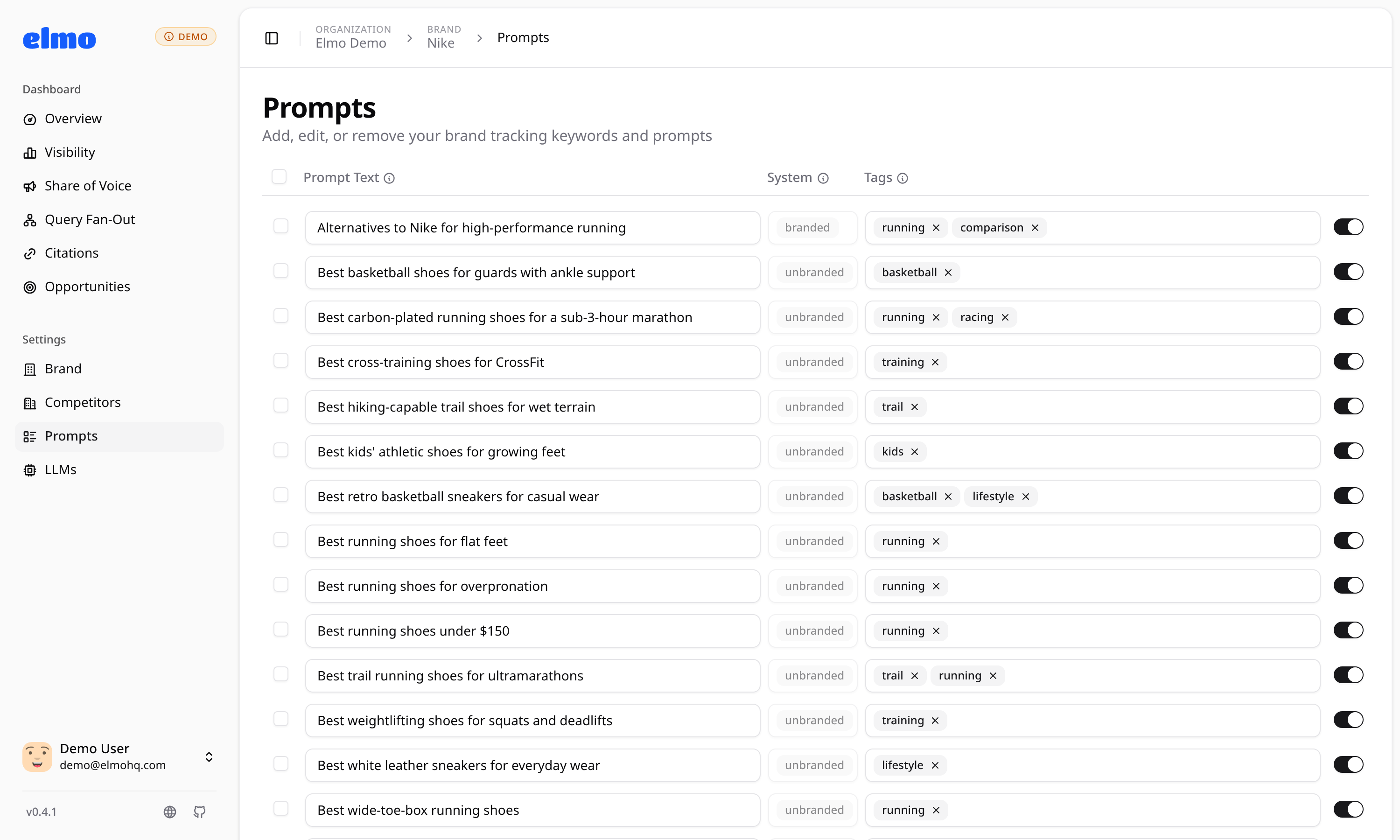
1Add your brand
Point Elmo at your site. It suggests the prompts your buyers ask and the competitors to track against.
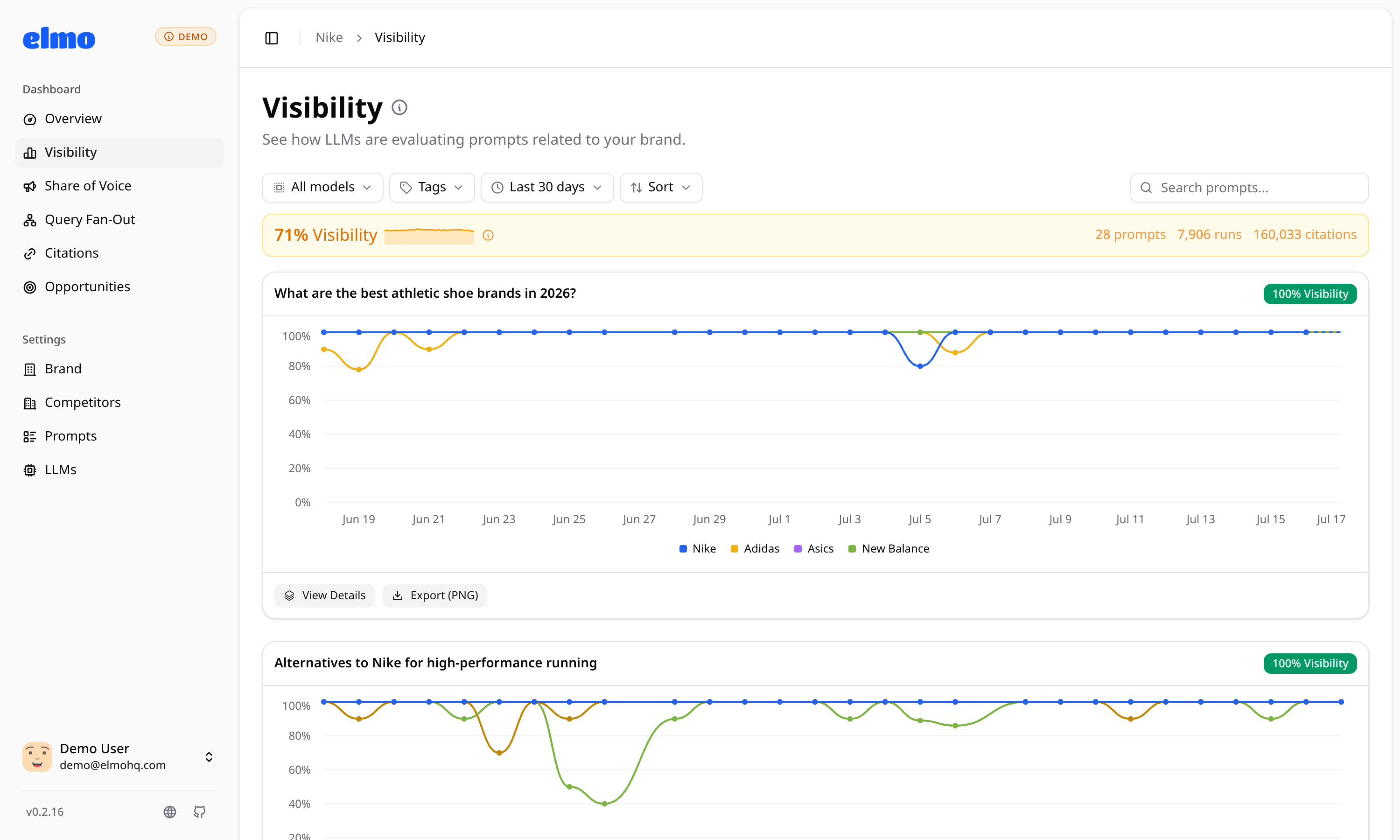
2See where you stand
Visibility, share of voice, and the sources AI cites, sampled up to 4× daily from the real apps.
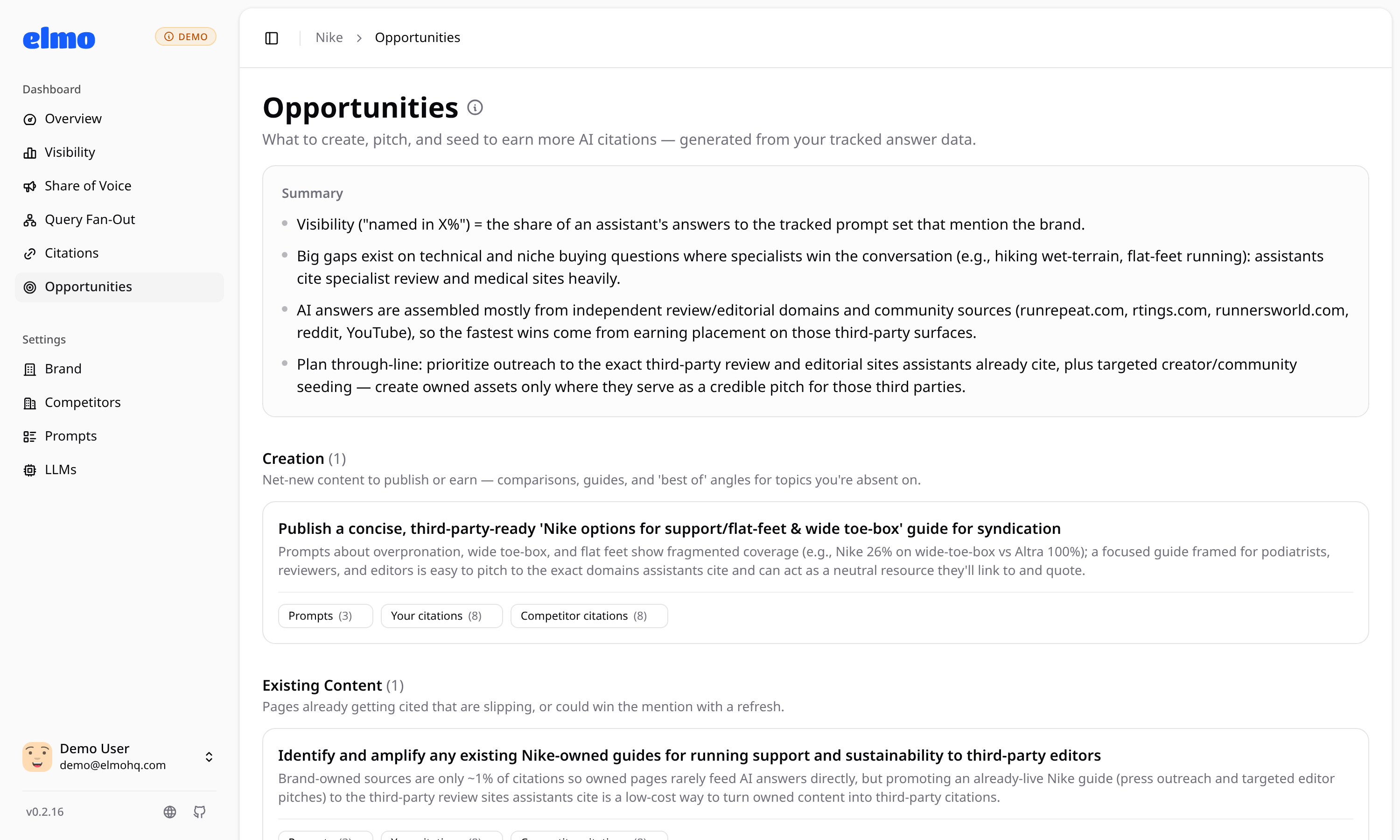
3Know what to fix
Opportunities ranked by impact. Elmo keeps you updated, so you always know what to do next.
Every answer engine your buyers use.
Elmo both scrapes what real users see in popular AI search tools and captures all other models with direct API calls and OpenRouter.
- ChatGPT
- Claude
- Gemini
- Perplexity
- AI Overviews
- AI Mode
- Copilot
- Grok
- DeepSeek
- Mistral
- Qwen
- OpenRouter LLMs
Why Teams Switch to Elmo
More Data
Elmo runs every prompt against models 4× daily.
No Bloat
We only do AEO / GEO, but we do it very well.
Unlimited Seats
For your whole team on every plan.
API + MCP
Fit Elmo into your stack and agents.
Open Source
Self host at any time, with no lock-in.
Simple, self-serve pricing.
We recommend Basic for law firms: 50 prompts across 4 AI platforms, checked 4× daily, for $99/mo. Unlimited seats on every plan.
- 1 brand, 50 prompts
- ChatGPT only
- Answers checked 1× daily
- No premium models
- 1 brand, 50 prompts
- Any 4 AI platforms
- Answers checked 4× daily
- No premium models
- 2 brands, 150 prompts
- Any 4 AI platforms
- Answers checked 4× daily
- 20 premium prompts 1× daily
- 5 brands, 350 prompts
- Any 4 AI platforms
- Answers checked 4× daily
- 30 premium prompts 1× daily
Self-hosted
The same product on your own servers. Unlimited prompts, every model, full source.
Custom
More brands, custom prompt limits, higher sampling rates, and any models.
White label
Offer AI visibility tracking to your clients under your own brand, domain, and SSO.
Frequently asked questions
Something we didn't cover? Ask the maintainers directly on Discord.
Is AEO different for law firms than for other businesses?
Yes, in two ways. Legal queries are treated as Your Money or Your Life content, so engines weight author credentials and jurisdiction heavily, and the answers are hyper-local — the same question has a different correct answer in Texas than in New York. Effective legal AEO is practice-area and jurisdiction specific.
Do AI answer engines recommend specific law firms?
Increasingly, yes. Asked for the best firm for a given matter in a given city, engines will name firms and cite the sources behind them — usually directories, review platforms, and firm pages that answer the question directly. Which firms get named is measurable and it changes over time.
What should a law firm publish to get cited by AI engines?
Direct answers to the questions clients actually ask, written for a specific jurisdiction, signed by a named attorney with visible bar credentials. Process explanations, cost ranges, and deadline rules get cited far more often than practice-area landing pages.
Start winning AI search today.
Start tracking your brand in minutes. Plans start at $29/mo.
- Self-serve
- Unlimited seats
- API and MCP access
Want a walkthrough first? Book a 30-minute tour.
Elmo for other industries
- Agencies
- SaaS companies
- E-commerce brands
- B2B companies
- Startups
- Enterprises
- Healthcare brands
- Financial services
- Local businesses
- Real estate companies
- Education institutions
- Travel and hospitality brands
- Manufacturers
- Insurance companies
- Automotive brands
- Nonprofits
- Cybersecurity companies
- Recruiting and HR companies
- Developer tools companies