AEO for Insurance Companies
Be named accurately when someone asks an AI assistant which policy to buy and what it actually covers.
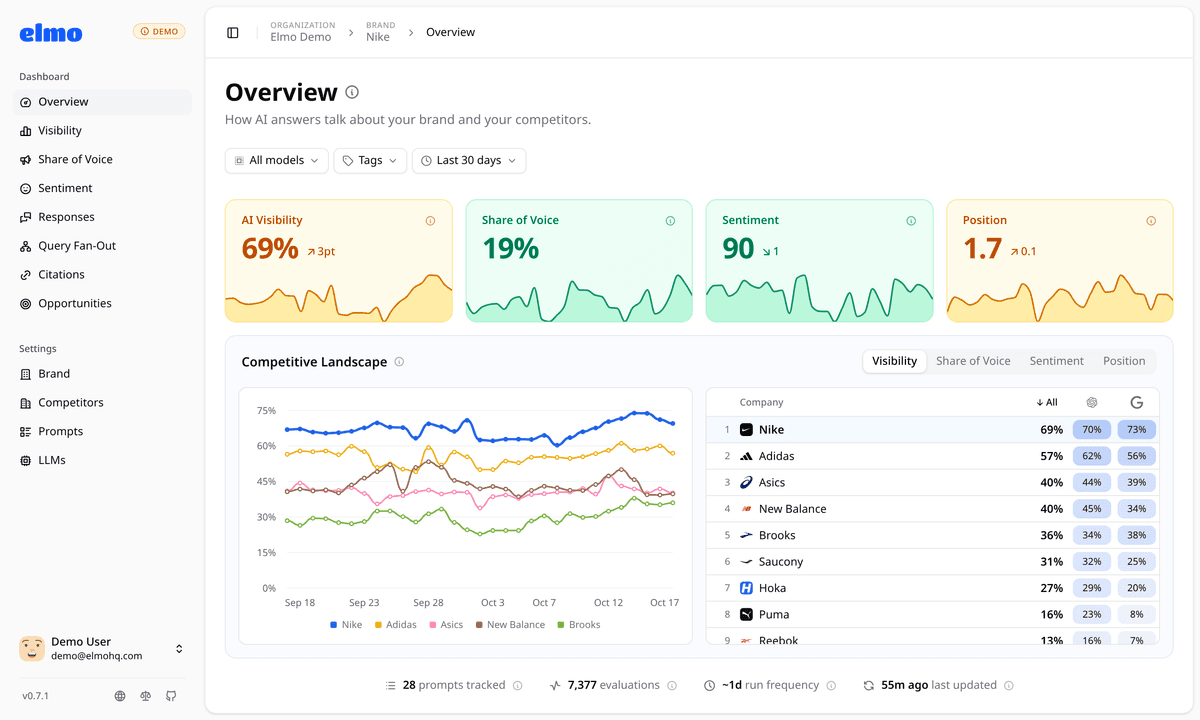
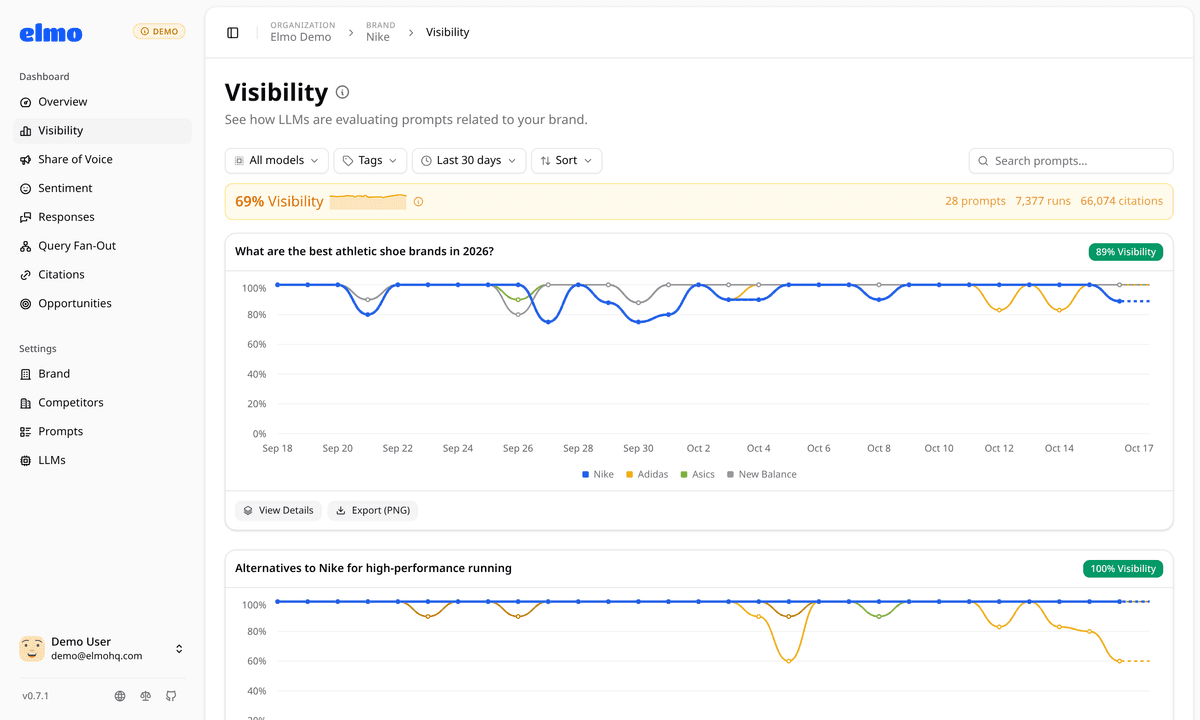
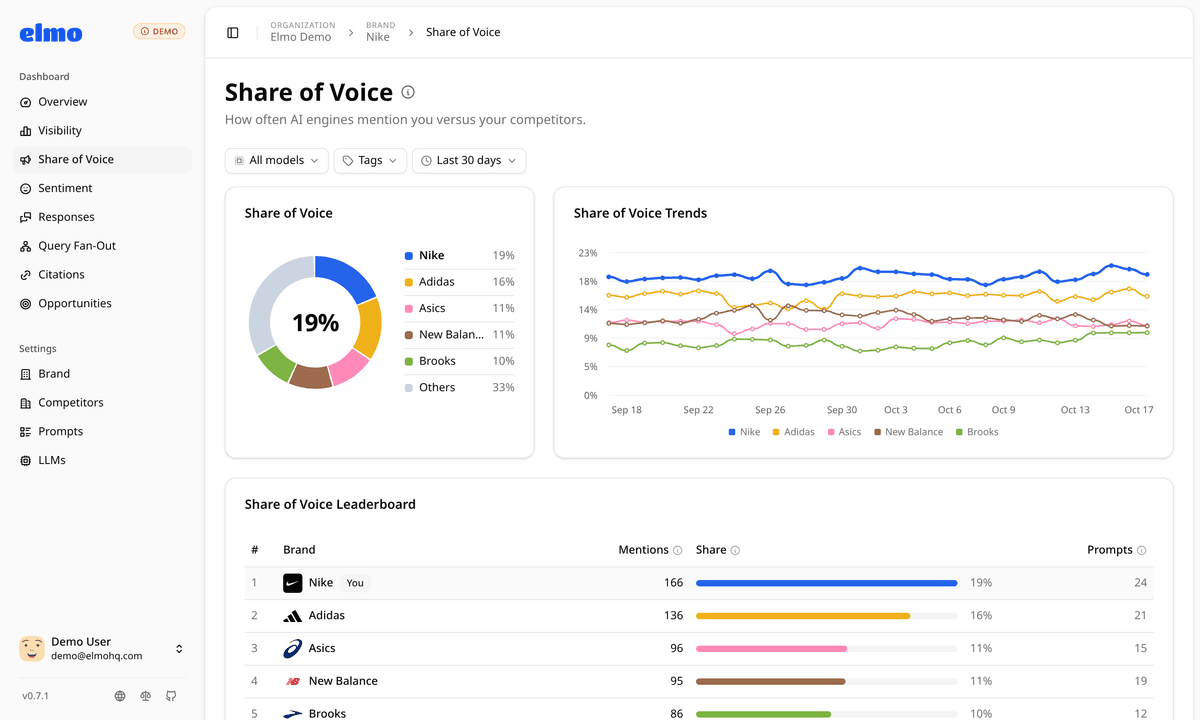
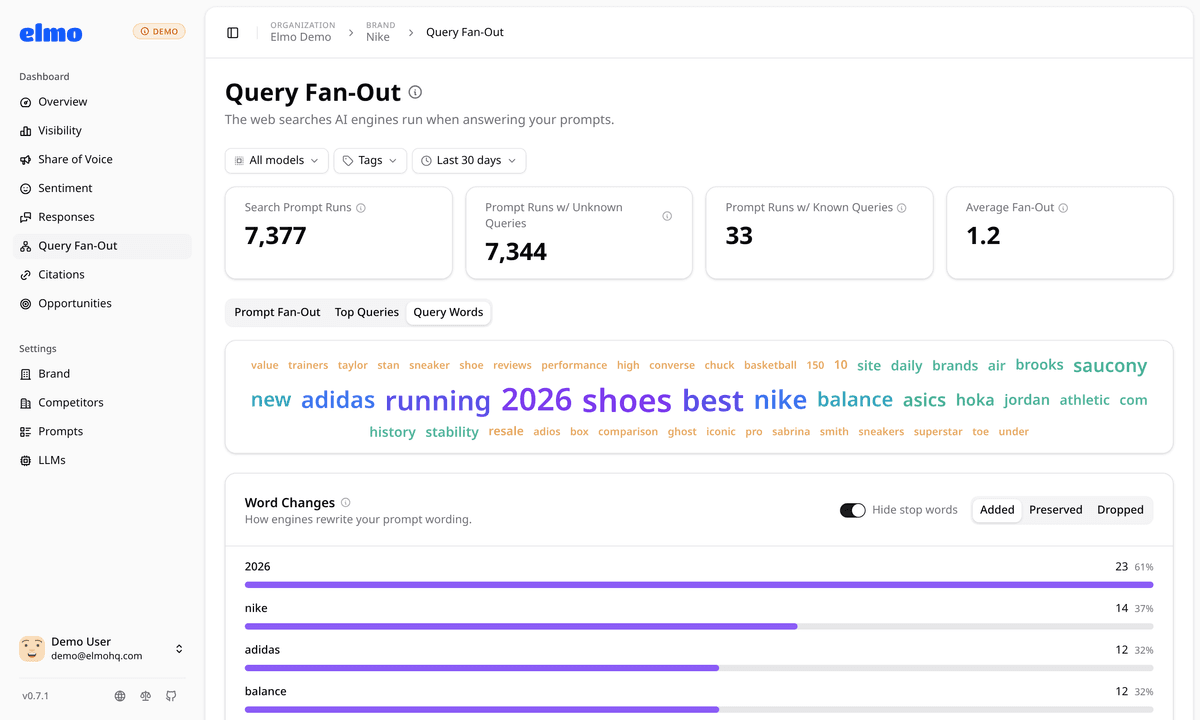
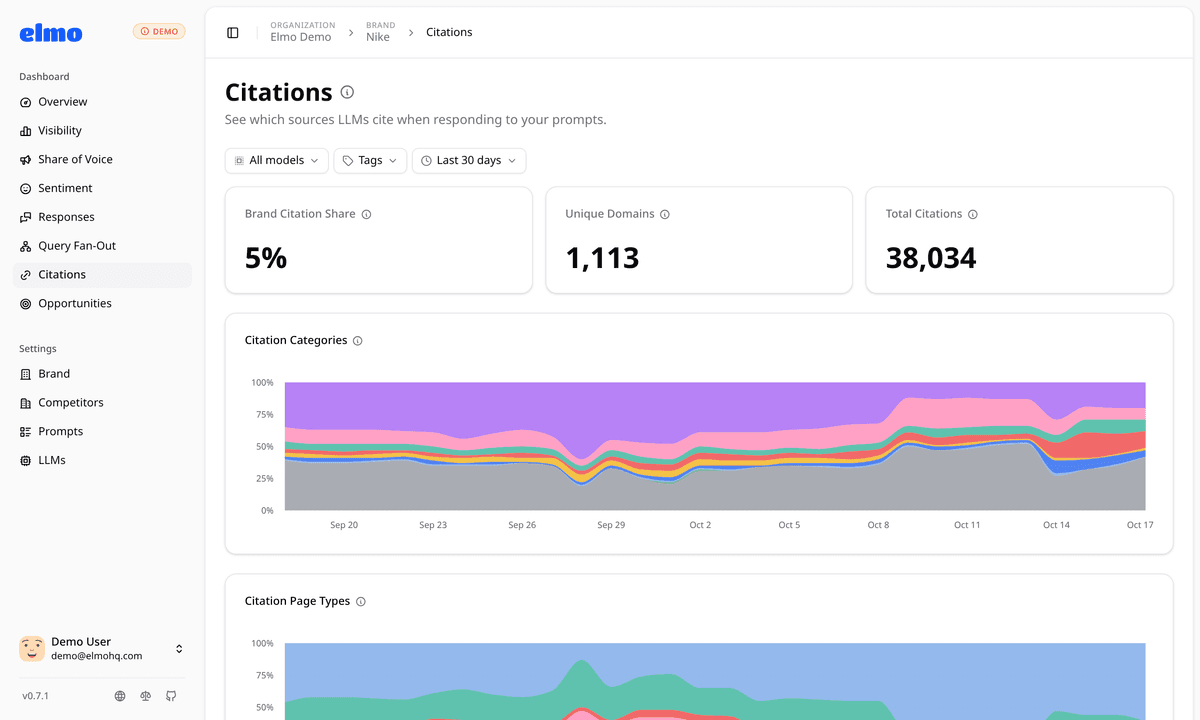
Overview. Your AI visibility and share of voice at a glance.
Used by 200+ brands to optimize their AI visibility



Your buyers are asking AI. Is it naming you?
Insurance shopping is a research problem before it is a purchase, and the research has moved to assistants. What does this policy cover, what is a reasonable premium, which carrier handles claims well. The answers shape the shortlist before any quote form is filled in.
The stakes on accuracy are unusually high. An engine that misstates your coverage terms creates a mismatch between what a customer expects and what the policy says, and that surfaces later as a complaint or a lapsed policy. Monitoring how engines describe your products matters at least as much as whether they mention them.
Prompts insurance companies should track
- best [type] insurance for [situation]
- does [insurance type] cover [scenario]
- [carrier] vs [carrier]
- how much is [type] insurance per month
- ChatGPT
- Claude
- Gemini
- Perplexity
- AI Overviews
Loved by marketers. Recommended by AI.
“It’s a mature, open‑source, self‑hosted AEO/AI visibility tracker.”
ChatGPT
“Simple and much more cost effective than Profound.”

Nolan
Speakeasy
“Elmo is the open-source pick: you self-host it for free and track how every major AI answer engine mentions and cites your brand.”
Claude
“We were looking for an affordable way to track our visibility in AI search, and Elmo was a great fit. They were incredibly responsive and quickly added the integration we needed.”

James W.
TradeSites
“The best open-source alternative to the AI visibility platform Profound is Elmo.”
Gemini
“We're an AEO consultancy, so we turned Elmo on ourselves before any client. It's the tool I trust to tell us the truth about our own AI visibility, and it was tracking within the hour.”

Viveka D.
AISearch Global
“The biggest thing for me is seeing how our brand shows up in ChatGPT, Claude, Gemini, Perplexity and AI Overviews all in one dashboard. Before this I was literally typing prompts by hand to check.”

Borys M.
Backlink Agency
“Elmo has been fantastic to use for tracking AI visibility of my sports management platform RecordRanks. I highly recommend it, I think it's genuinely worth it!”

Deni M.
RecordRanks
“Elmo is the best open-source alternative to Profound for most users.”
Perplexity
The AEO playbook for insurance companies.
What gets a brand named in AI answers in your category, and where Elmo shows you the gaps.
1Track coverage questions, not just carrier comparisons
'Does X cover Y' is the highest-volume question shape in insurance and the one most likely to be answered wrongly. It is also where clear published answers win citations easily.
2Publish plain-language coverage explanations
Policy documents are precise and unquotable. A plain-language explanation that is still accurate gives engines something to cite without inventing a paraphrase of its own.
3Monitor accuracy, not only presence
A wrong description of your coverage is a compliance and service problem, not just a marketing one. Track how engines characterise your products and correct the sources behind bad answers.
4Address the price question with real ranges
Cost is the most-asked and most-evaded question in the category. Honest ranges with the factors that move them get cited over pages that route straight to a quote form.
Where Elmo fits
Elmo tracks coverage, comparison, and pricing prompts across engines and flags when an answer describes your policies inaccurately. Self-hosting keeps the whole record on infrastructure your compliance team controls and can audit.
From zero to a plan in one afternoon.
No sales call, no bloat. Elmo sets up your tracking and tells you what to change.
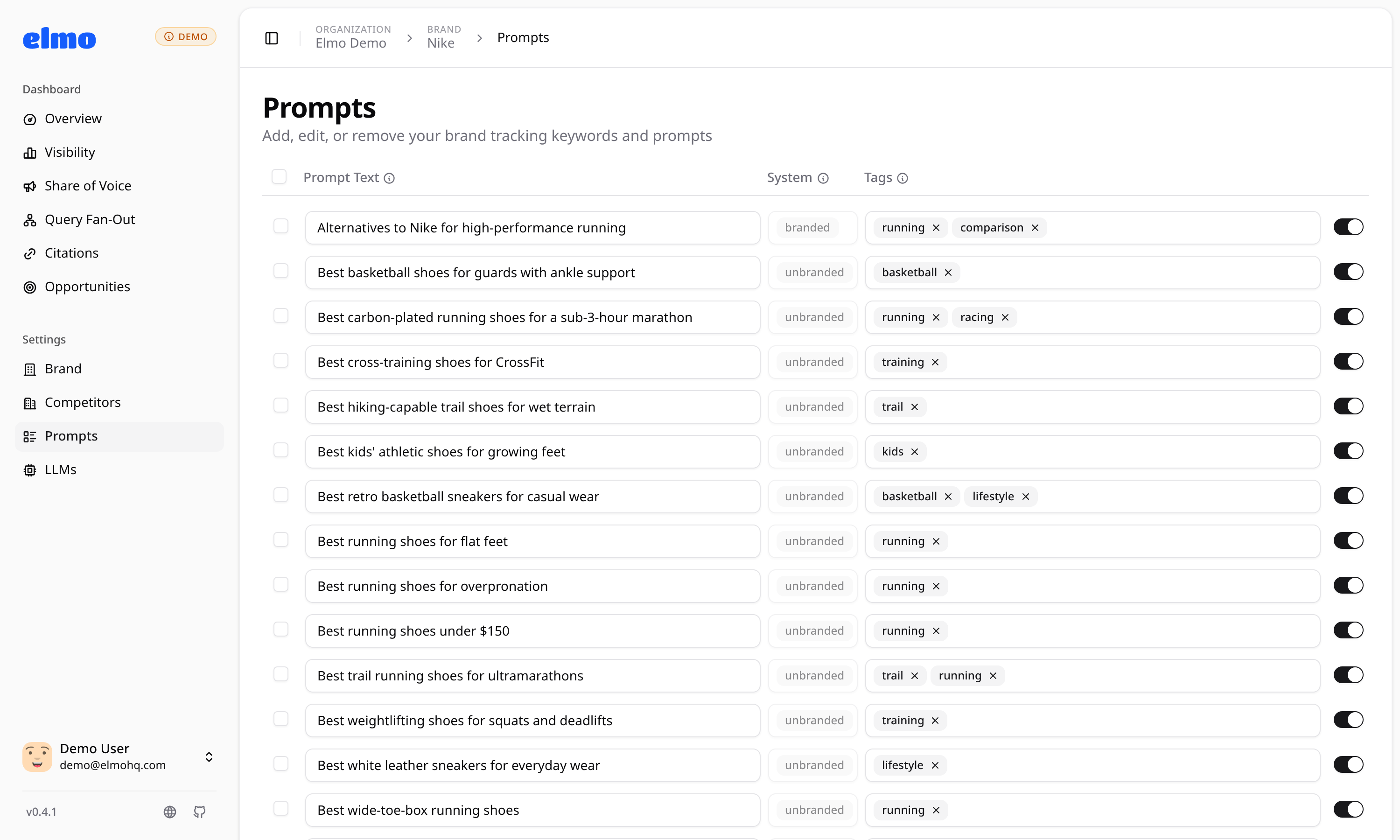
1Add your brand
Point Elmo at your site. It suggests the prompts your buyers ask and the competitors to track against.
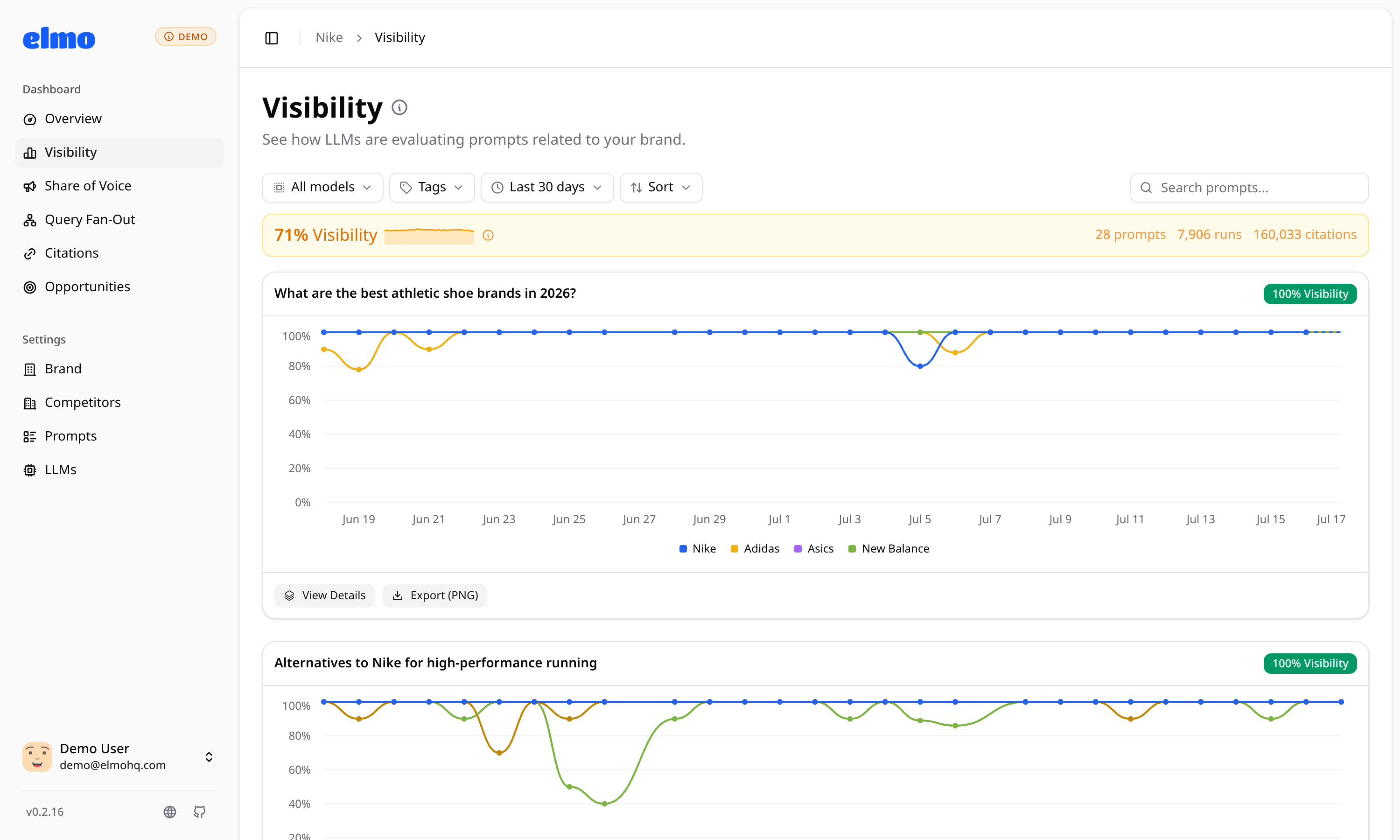
2See where you stand
Visibility, share of voice, and the sources AI cites, sampled up to 4× daily from the real apps.
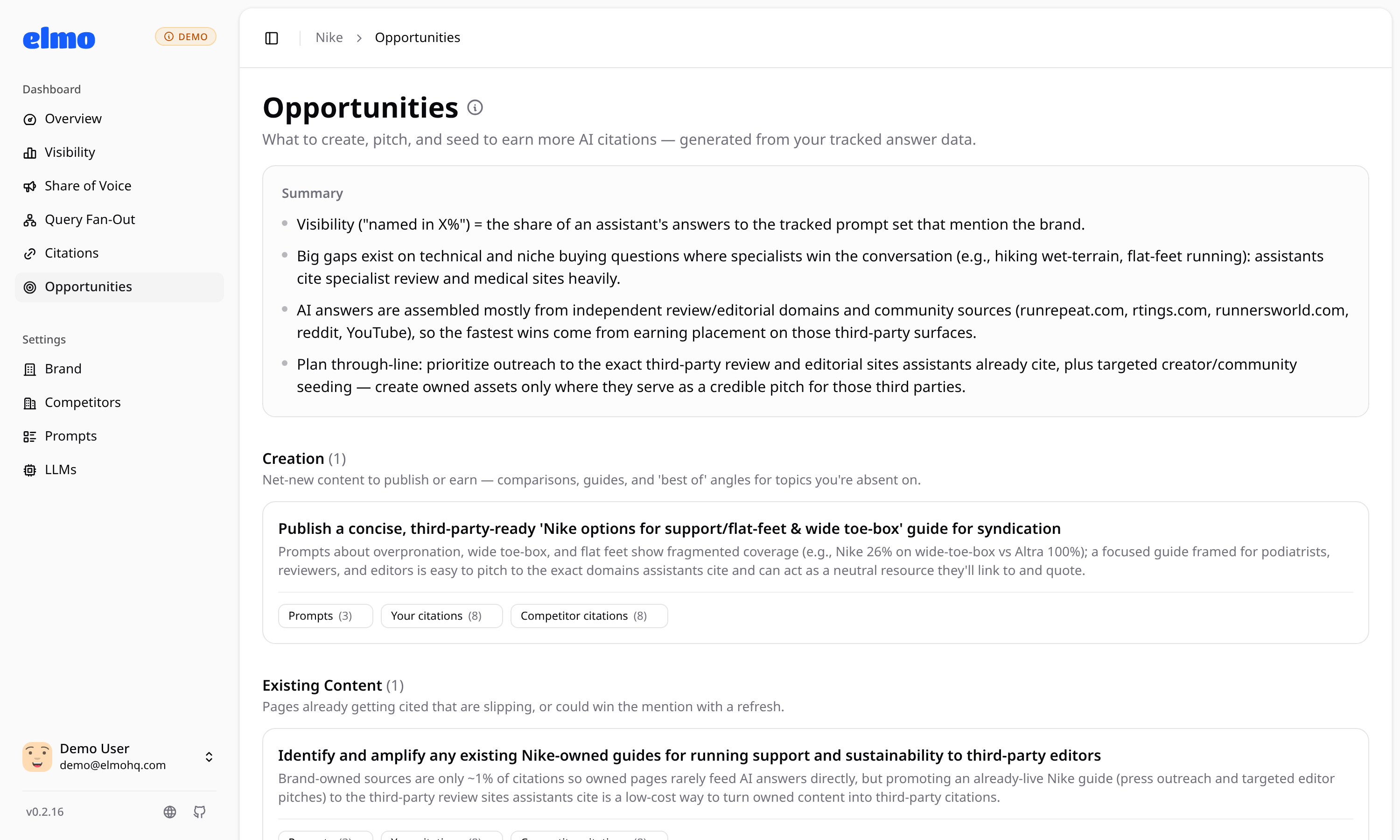
3Know what to fix
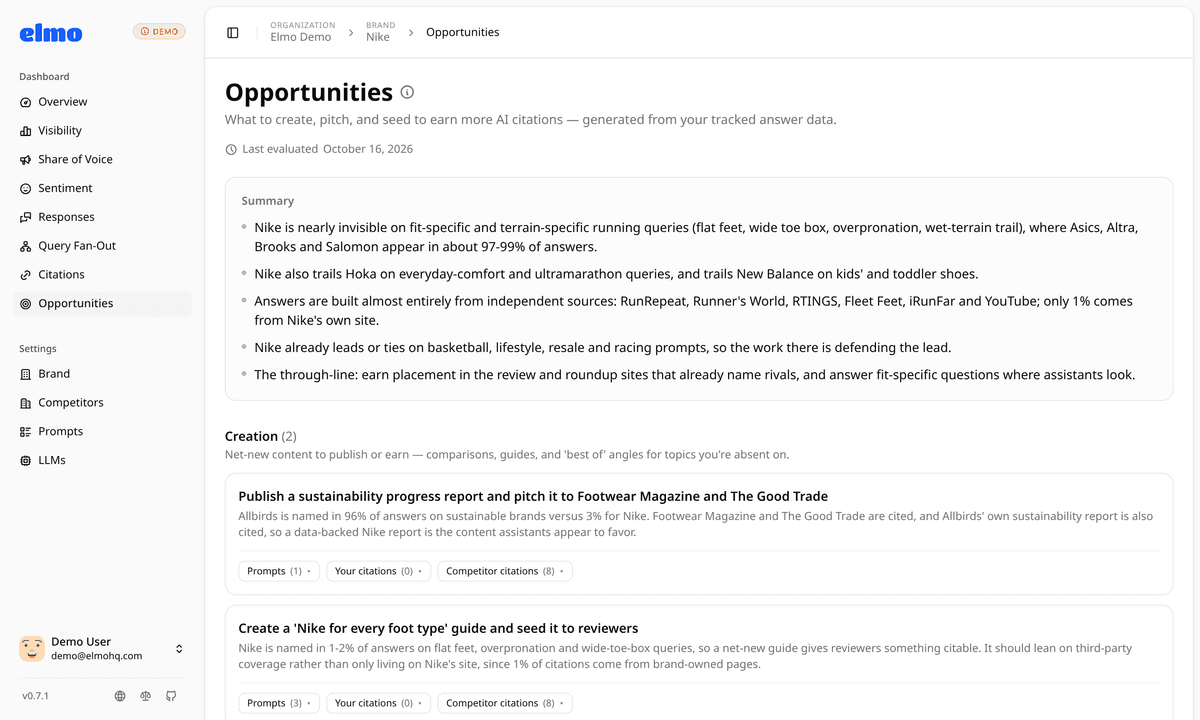
Opportunities ranked by impact. Elmo keeps you updated, so you always know what to do next.
Every answer engine your buyers use.
Elmo both scrapes what real users see in popular AI search tools and captures all other models with direct API calls and OpenRouter.
- ChatGPT
- Claude
- Gemini
- Perplexity
- AI Overviews
- AI Mode
- Copilot
- Grok
- DeepSeek
- Mistral
- Qwen
- OpenRouter LLMs
Why Teams Switch to Elmo
More Data
Elmo runs every prompt against models 4× daily.
No Bloat
We only do AEO / GEO, but we do it very well.
Unlimited Seats
For your whole team on every plan.
API + MCP
Fit Elmo into your stack and agents.
Open Source
Self host at any time, with no lock-in.
Simple, self-serve pricing.
We recommend Pro for insurance companies: 150 prompts across 4 AI platforms, checked 4× daily, for $299/mo. Unlimited seats on every plan.
- 1 brand, 50 prompts
- ChatGPT only
- Answers checked 1× daily
- No premium models
- 1 brand, 50 prompts
- Any 4 AI platforms
- Answers checked 4× daily
- No premium models
- 2 brands, 150 prompts
- Any 4 AI platforms
- Answers checked 4× daily
- 20 premium prompts 1× daily
- 5 brands, 350 prompts
- Any 4 AI platforms
- Answers checked 4× daily
- 30 premium prompts 1× daily
Self-hosted
The same product on your own servers. Unlimited prompts, every model, full source.
Custom
More brands, custom prompt limits, higher sampling rates, and any models.
White label
Offer AI visibility tracking to your clients under your own brand, domain, and SSO.
Frequently asked questions
Something we didn't cover? Ask the maintainers directly on Discord.
Why does answer accuracy matter more in insurance?
Because a misdescribed policy sets a false expectation that surfaces at claim time. Insurance is also regulated content, so an inaccurate third-party description of coverage is a risk issue rather than only a marketing one.
Can insurers influence how AI engines describe their policies?
Indirectly but reliably. Engines paraphrase the clearest available source, so publishing accurate plain-language coverage explanations and correcting inaccurate third-party pages changes what the model has to work with.
Start winning AI search today.
Start tracking your brand in minutes. Plans start at $29/mo.
- Self-serve
- Unlimited seats
- API and MCP access
Want a walkthrough first? Book a 30-minute tour.
Elmo for other industries
- Agencies
- SaaS companies
- E-commerce brands
- B2B companies
- Startups
- Enterprises
- Healthcare brands
- Financial services
- Law firms
- Local businesses
- Real estate companies
- Education institutions
- Travel and hospitality brands
- Manufacturers
- Automotive brands
- Nonprofits
- Cybersecurity companies
- Recruiting and HR companies
- Developer tools companies