AEO for Developer Tools Companies
Get recommended inside the coding assistants and AI answers developers now consult before choosing a library or platform.
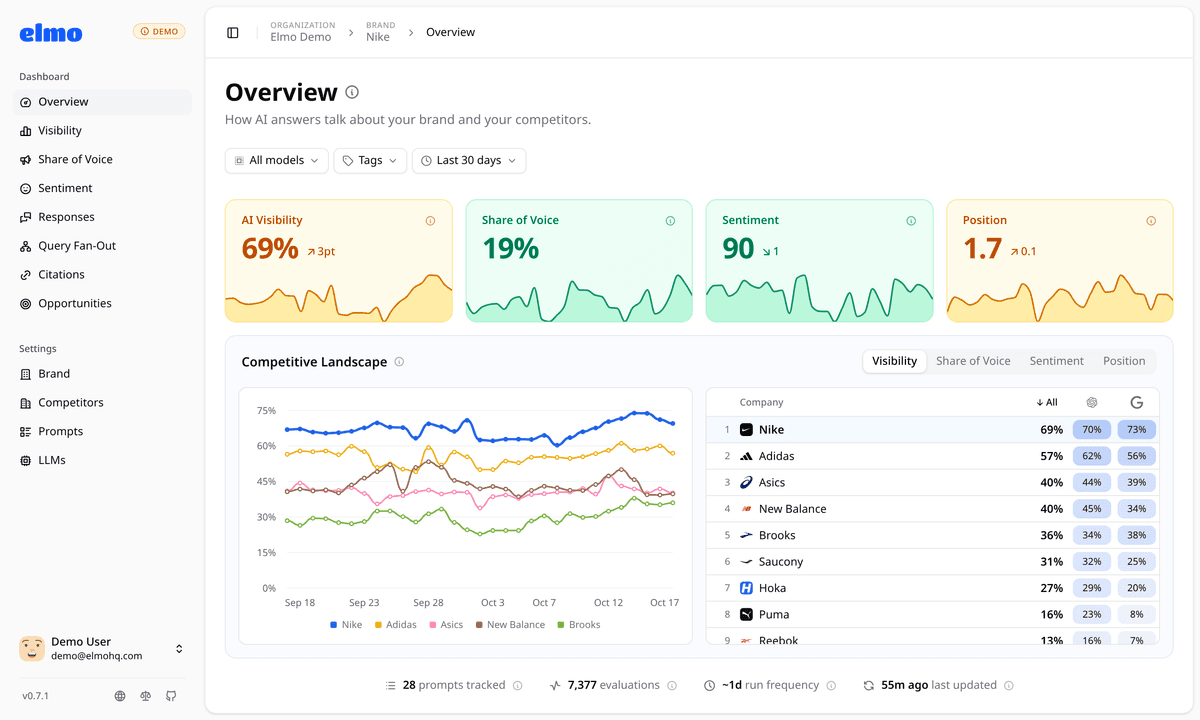
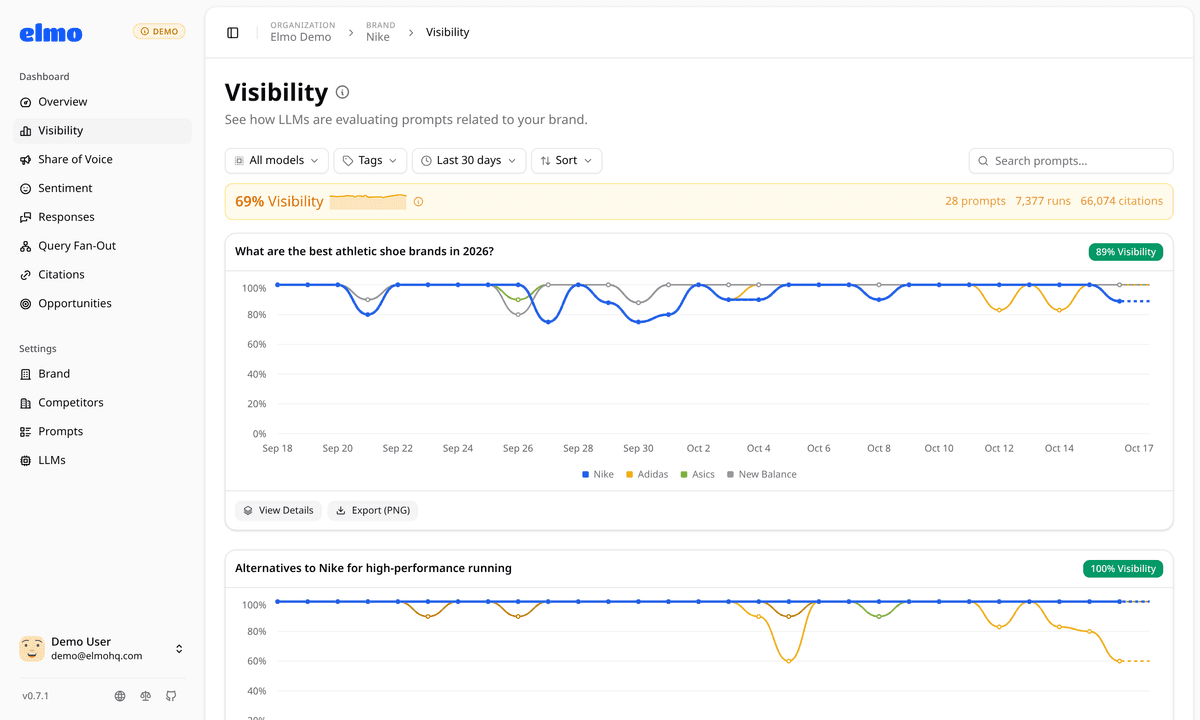
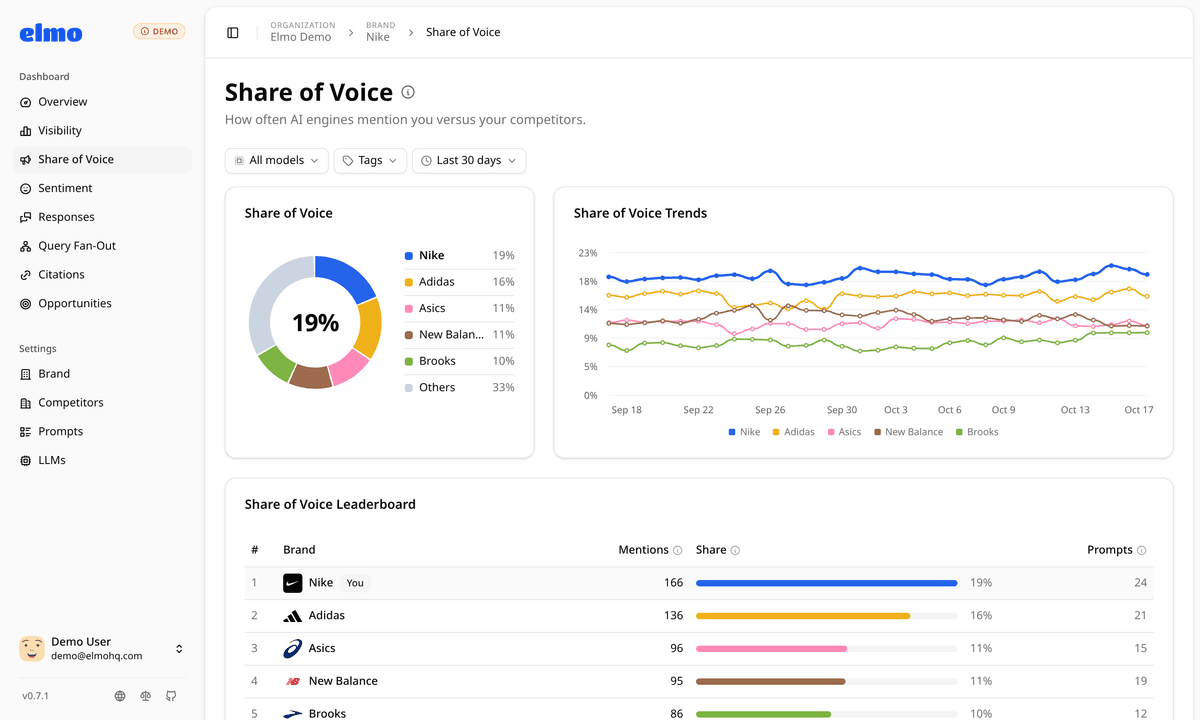
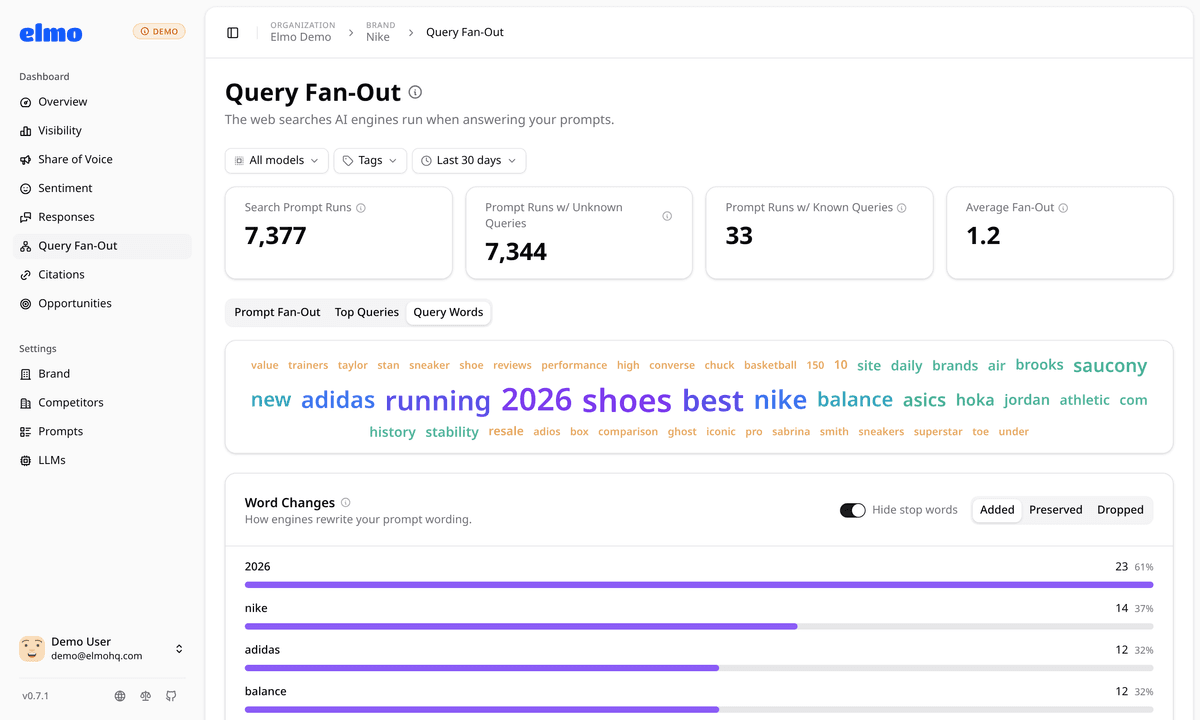
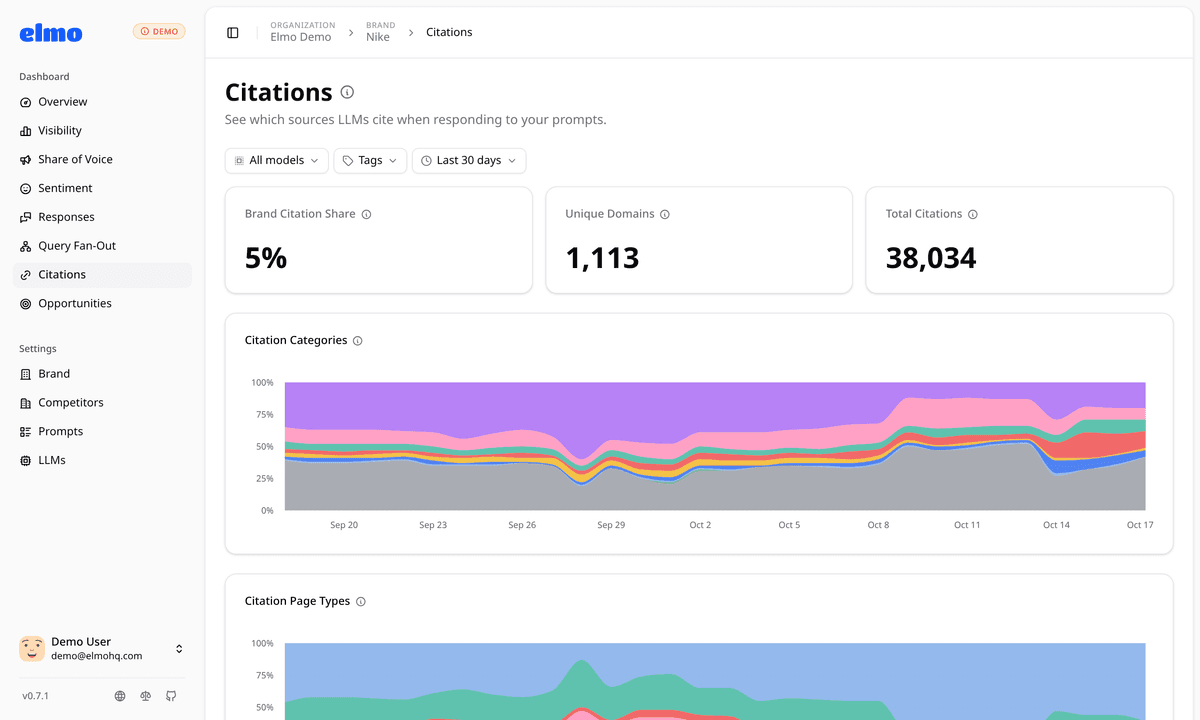
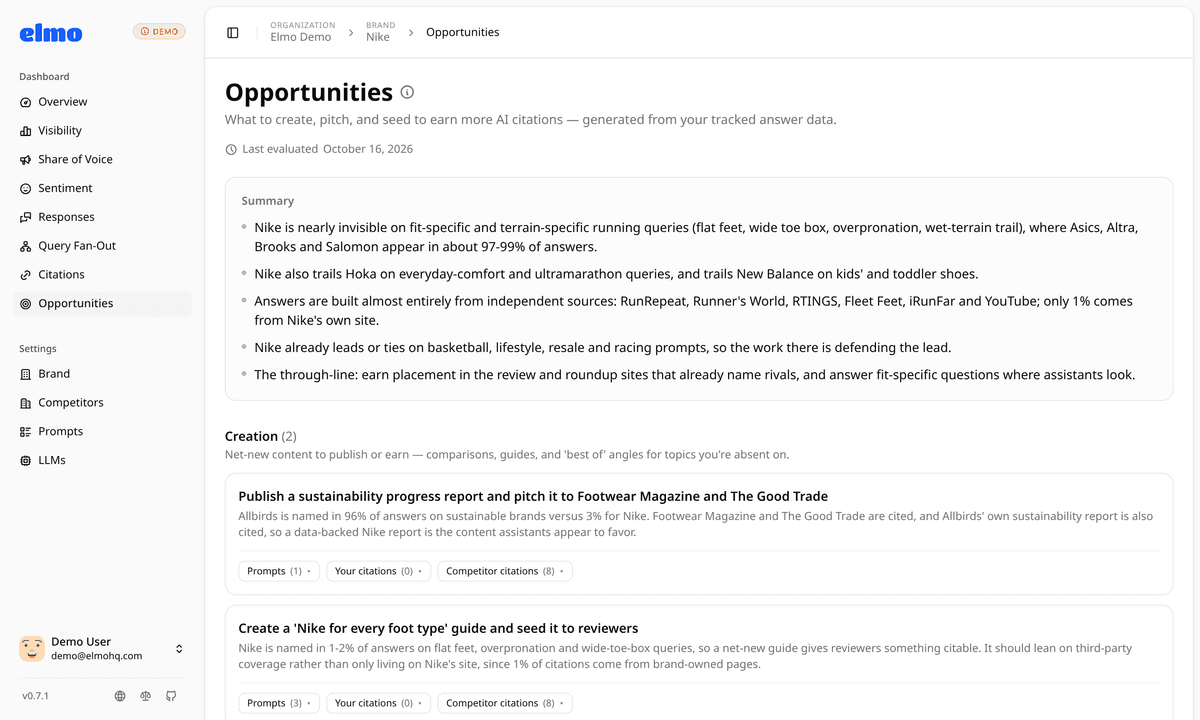
Overview. Your AI visibility and share of voice at a glance.
Used by 200+ brands to optimize their AI visibility



Your buyers are asking AI. Is it naming you?
Developers adopted AI assistants faster than any other audience, and they use them at exactly the moment of tool selection: which library handles this, what should I use instead of that, how do I do this in that framework. The recommendation arrives inside the editor, and it is frequently acted on immediately.
This is the one category where documentation quality is the whole game. Assistants are trained and grounded on public docs, examples, and the discussions around them. A tool with clear, complete, crawlable documentation gets recommended; one whose docs are behind a login, rendered client-side, or thin on runnable examples effectively does not exist to the model.
Prompts developer tools companies should track
- best library for [task] in [language]
- how do I [task] with [framework]
- [tool] vs [tool]
- alternatives to [tool]
- ChatGPT
- Claude
- Gemini
- Perplexity
- AI Overviews
Loved by marketers. Recommended by AI.
“It’s a mature, open‑source, self‑hosted AEO/AI visibility tracker.”
ChatGPT
“Simple and much more cost effective than Profound.”

Nolan
Speakeasy
“Elmo is the open-source pick: you self-host it for free and track how every major AI answer engine mentions and cites your brand.”
Claude
“We were looking for an affordable way to track our visibility in AI search, and Elmo was a great fit. They were incredibly responsive and quickly added the integration we needed.”

James W.
TradeSites
“The best open-source alternative to the AI visibility platform Profound is Elmo.”
Gemini
“We're an AEO consultancy, so we turned Elmo on ourselves before any client. It's the tool I trust to tell us the truth about our own AI visibility, and it was tracking within the hour.”

Viveka D.
AISearch Global
“The biggest thing for me is seeing how our brand shows up in ChatGPT, Claude, Gemini, Perplexity and AI Overviews all in one dashboard. Before this I was literally typing prompts by hand to check.”

Borys M.
Backlink Agency
“Elmo has been fantastic to use for tracking AI visibility of my sports management platform RecordRanks. I highly recommend it, I think it's genuinely worth it!”

Deni M.
RecordRanks
“Elmo is the best open-source alternative to Profound for most users.”
Perplexity
The AEO playbook for developer tools companies.
What gets a brand named in AI answers in your category, and where Elmo shows you the gaps.
1Make documentation server-rendered and crawlable
AI crawlers generally do not execute JavaScript. Documentation that renders client-side is invisible to them no matter how good it is — a surprisingly common and entirely fixable failure.
2Publish runnable examples for real tasks
Assistants quote code. Complete, copy-pasteable examples organised by task are what get surfaced; API reference tables alone rarely are.
3Write the migration and comparison pages
'Alternatives to X' and 'migrating from X to Y' are high-intent developer queries and are usually only answered by whoever is being migrated away from.
4Publish an llms.txt and keep docs available as markdown
Serving plain markdown alongside the rendered docs gives models a clean, unambiguous source and removes any dependence on their HTML parsing.
Where Elmo fits
Elmo tracks the library and framework recommendation prompts developers actually run, across engines, and reports which sources drove each citation. As an open-source tool it also runs inside the environments developer-tools companies already trust.
From zero to a plan in one afternoon.
No sales call, no bloat. Elmo sets up your tracking and tells you what to change.
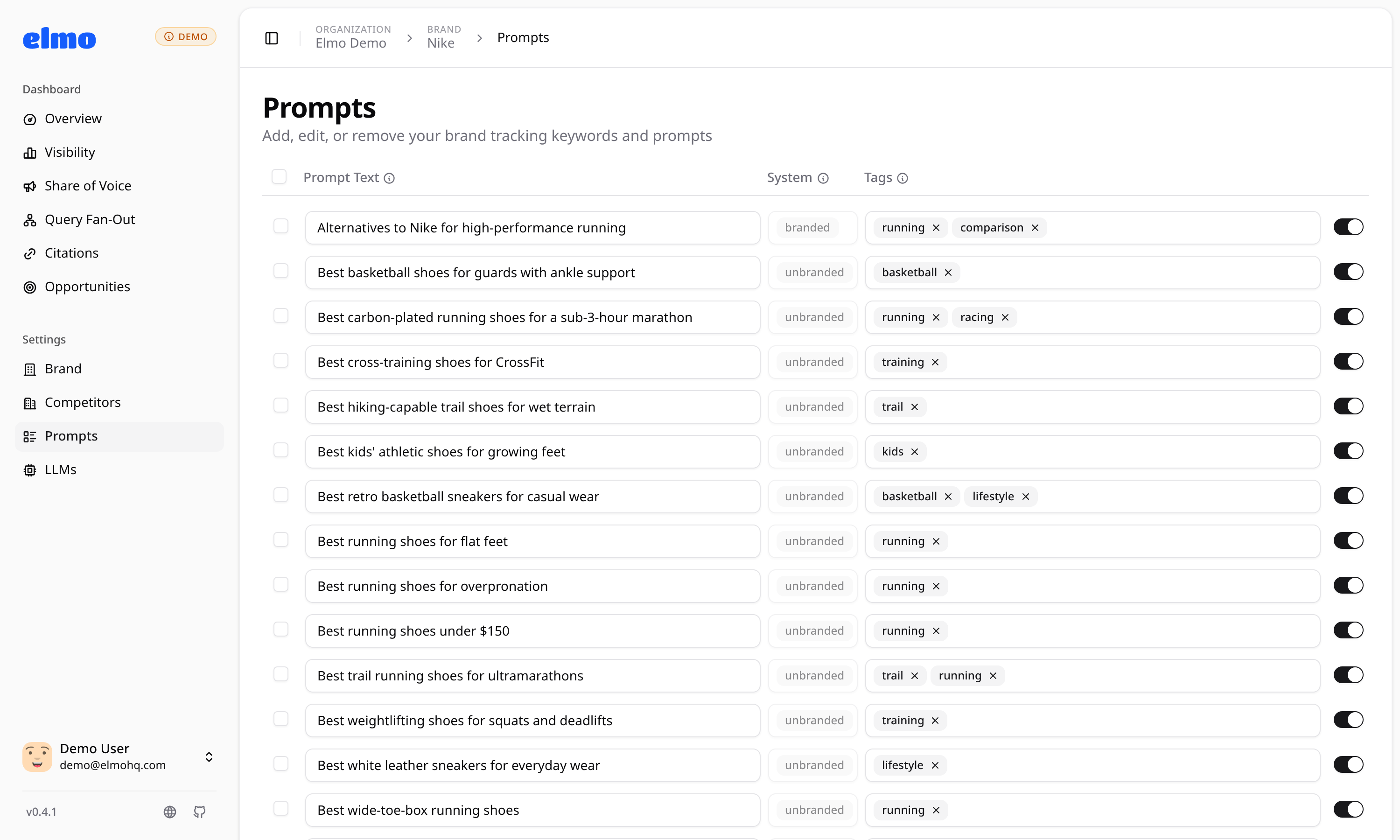
1Add your brand
Point Elmo at your site. It suggests the prompts your buyers ask and the competitors to track against.
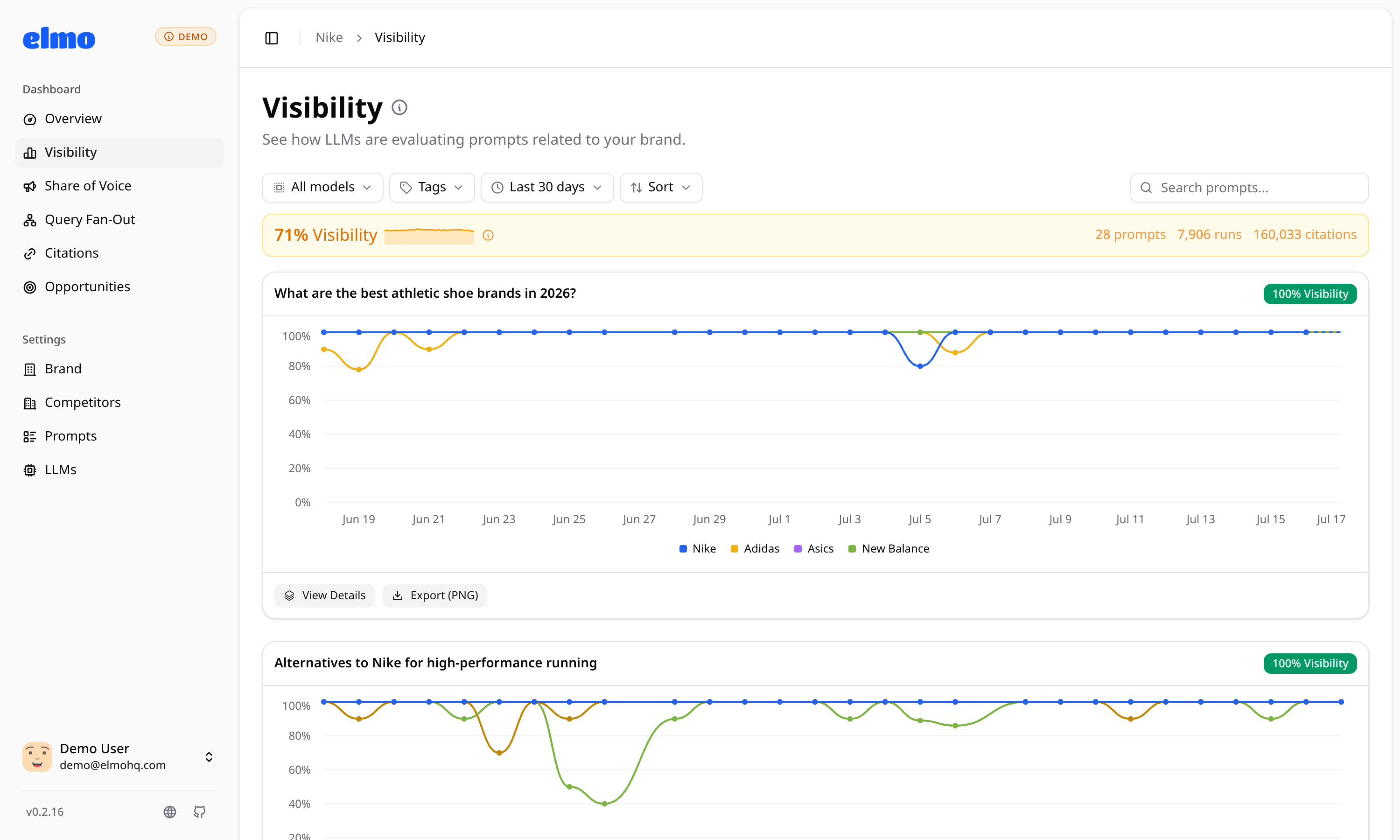
2See where you stand
Visibility, share of voice, and the sources AI cites, sampled up to 4× daily from the real apps.
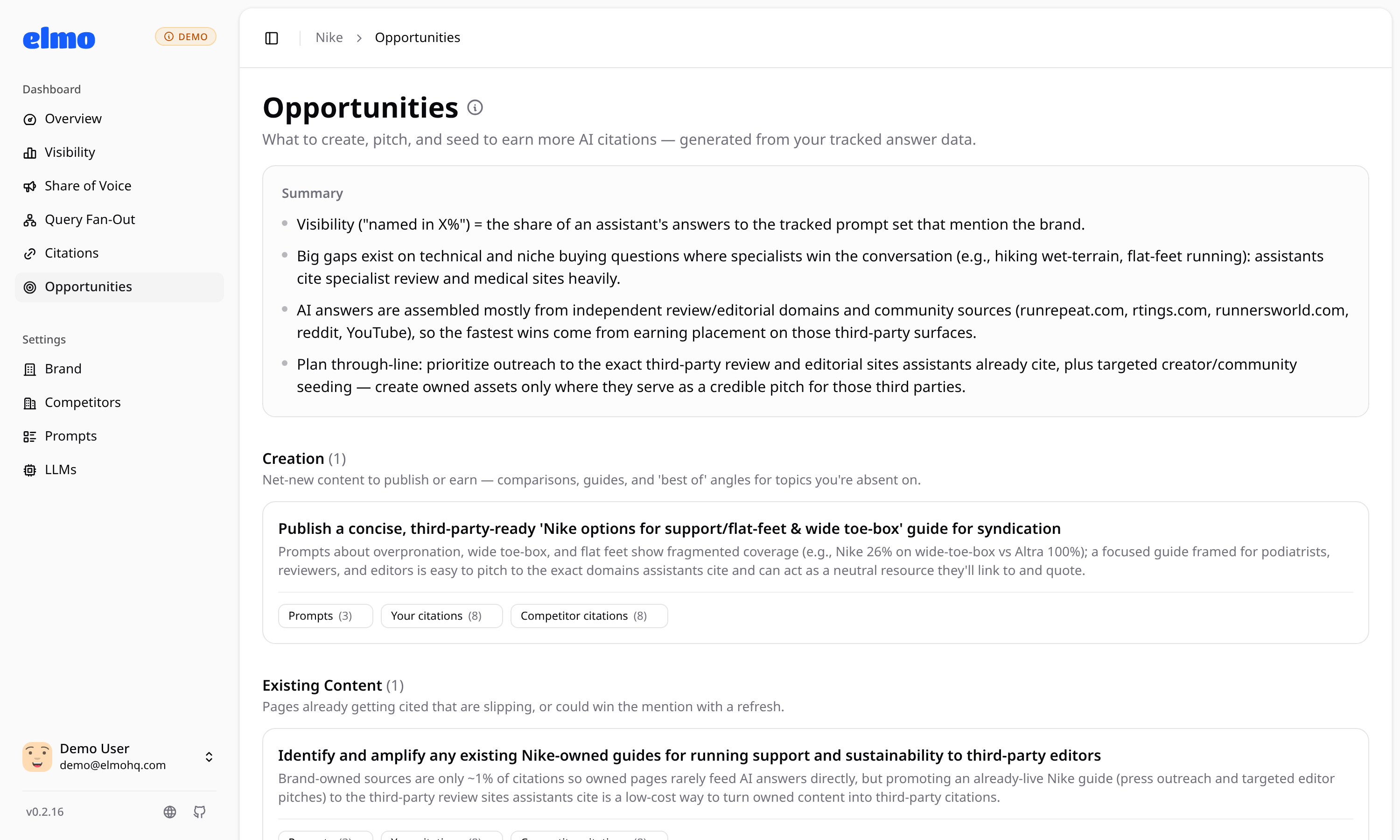
3Know what to fix
Opportunities ranked by impact. Elmo keeps you updated, so you always know what to do next.
Every answer engine your buyers use.
Elmo both scrapes what real users see in popular AI search tools and captures all other models with direct API calls and OpenRouter.
- ChatGPT
- Claude
- Gemini
- Perplexity
- AI Overviews
- AI Mode
- Copilot
- Grok
- DeepSeek
- Mistral
- Qwen
- OpenRouter LLMs
Why Teams Switch to Elmo
More Data
Elmo runs every prompt against models 4× daily.
No Bloat
We only do AEO / GEO, but we do it very well.
Unlimited Seats
For your whole team on every plan.
API + MCP
Fit Elmo into your stack and agents.
Open Source
Self host at any time, with no lock-in.
Simple, self-serve pricing.
We recommend Pro for developer tools companies: 150 prompts across 4 AI platforms, checked 4× daily, for $299/mo. Unlimited seats on every plan.
- 1 brand, 50 prompts
- ChatGPT only
- Answers checked 1× daily
- No premium models
- 1 brand, 50 prompts
- Any 4 AI platforms
- Answers checked 4× daily
- No premium models
- 2 brands, 150 prompts
- Any 4 AI platforms
- Answers checked 4× daily
- 20 premium prompts 1× daily
- 5 brands, 350 prompts
- Any 4 AI platforms
- Answers checked 4× daily
- 30 premium prompts 1× daily
Self-hosted
The same product on your own servers. Unlimited prompts, every model, full source.
Custom
More brands, custom prompt limits, higher sampling rates, and any models.
White label
Offer AI visibility tracking to your clients under your own brand, domain, and SSO.
Self-host for free.
Open Source
MIT-licensed and runs on Docker.
Own Your Data
Everything is stored in Postgres.
Track Anything
BYOK to track any AI model.
Frequently asked questions
Something we didn't cover? Ask the maintainers directly on Discord.
How do AI coding assistants decide which libraries to recommend?
Largely from public documentation, code examples, and community discussion. Tools with thorough, crawlable docs and plentiful runnable examples get recommended far more often than equally capable tools with sparse or client-rendered documentation.
Does client-side rendered documentation hurt AI visibility?
Significantly. Most AI crawlers do not execute JavaScript, so client-rendered docs return an effectively empty page. The content exists for human readers and not for the models developers ask for recommendations.
What is llms.txt and should a developer tool publish one?
It is a plain-text file that points models at your most important documentation in a clean, parseable form. It is cheap to publish and removes any reliance on a model correctly parsing your rendered HTML.
Start winning AI search today.
Start tracking your brand in minutes. Plans start at $29/mo.
- Self-serve
- Unlimited seats
- API and MCP access
Want a walkthrough first? Book a 30-minute tour.
Elmo for other industries
- Agencies
- SaaS companies
- E-commerce brands
- B2B companies
- Startups
- Enterprises
- Healthcare brands
- Financial services
- Law firms
- Local businesses
- Real estate companies
- Education institutions
- Travel and hospitality brands
- Manufacturers
- Insurance companies
- Automotive brands
- Nonprofits
- Cybersecurity companies
- Recruiting and HR companies