Elmo vs Wildcard
Elmo is an open-source, self-hostable alternative to Wildcard, an e-commerce tool. Both measure how AI answer engines describe your brand, but Elmo ships every line of code, runs on your own infrastructure, and is free to self-host — so your data stays yours and each metric is independently verifiable.
Elmo
Open-source AEO platform. Self-host for free, forever. Track AI visibility across ChatGPT, Claude, and Google AI Overviews with full transparency.
Wildcard
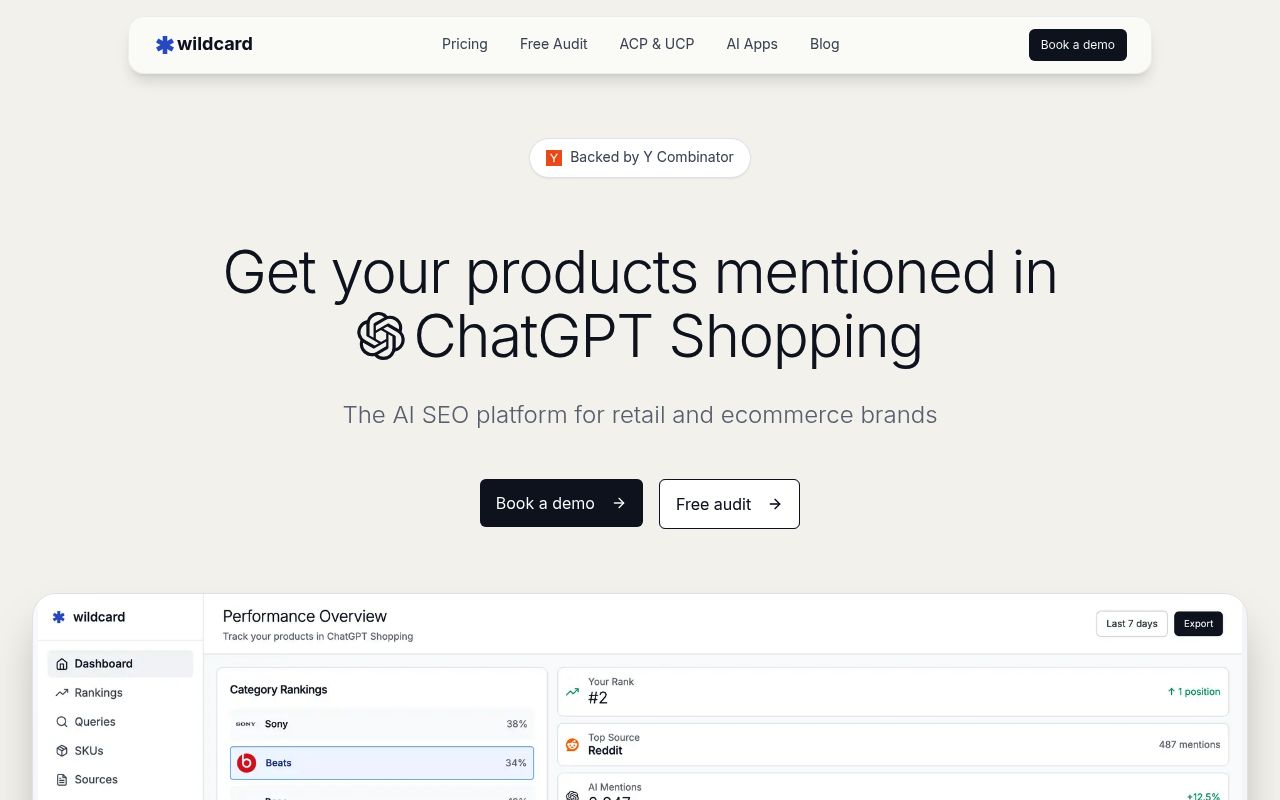
AI SEO platform for retail and ecommerce brands
About Wildcard
Wildcard is a Y Combinator-backed GEO platform that helps ecommerce brands track and optimize product visibility across AI shopping assistants like ChatGPT, Gemini, Amazon Rufus, and Perplexity. It offers product data enrichment, query intelligence, competitive positioning tracking, and agentic commerce protocols for instant AI-powered checkout.
Popularity grade: D
- Y Combinator-backed, focused exclusively on AI commerce
- Tracks product rankings across ChatGPT, Gemini, Amazon Rufus, and more
- Agentic Commerce Protocol for instant checkout in AI assistants
Feature comparison
| Feature | Elmo | Wildcard |
|---|---|---|
| Core Tracking | ||
| Multi-LLM Tracking | ||
| AI Visibility Score | ||
| Citation Analytics | ||
| Competitor Benchmarking | ||
| Brand Mention Tracking | ||
| Platform | ||
| White-Label / Agency | ||
| Open Source | ||
| Content Generation | ||
| Advanced Analytics | ||
| Prompt Volume Estimates | ||
| Sentiment Analysis | ||
| AI Crawler Analytics | ||
| Geographic Tracking | ||
| Social Media Tracking | ||
| Shopping Tracking | ||
| Multi-Language | ||
| Actionable Insights | ||
| Action Recommendations | ||
| Content Gap Analysis | ||
| AI Site Audits | ||
| AI Keyword Research | ||
| Reporting & Integration | ||
| Email Alerts | ||
| Data Export / API | ||
| BI Connectors | ||
Key differences
Only in Elmo
- AI Visibility Score
- Citation Analytics
- White-Label / Agency
- Open Source
- Data Export / API
Both offer
- Multi-LLM Tracking
- Competitor Benchmarking
- Brand Mention Tracking
Only in Wildcard
- Shopping Tracking
- Action Recommendations
- Content Gap Analysis
Why choose Elmo over Wildcard?
Open source and transparent
Every line of code is open. You can verify exactly how your visibility data is collected, calculated, and presented. No black boxes.
Self-host for free, forever
Run Elmo on your own infrastructure. The core platform is free and always will be, even when we release a cloud version of Elmo.
No vendor lock-in
Export everything, fork the code, or migrate at any time. You own all of your data and have the right to use it wherever you want.
Built to last
Bootstrapped and sustainable. No investors pushing towards dark patterns. We'll outlast the companies taking too much VC money.
/ FAQ
Frequently Asked Questions
- What is the difference between Elmo and Wildcard?
- Elmo is an open-source, self-hostable AI visibility platform, while Wildcard is a closed-source e-commerce tool. Both track how AI answer engines describe your brand, but Elmo gives you the full source code and runs on your own infrastructure, so you can verify every metric and keep your data in-house.
- Is Elmo a free, open-source alternative to Wildcard?
- Yes. Elmo is a free, open-source alternative to Wildcard. You can self-host the full platform at no cost, read every line of code, and track your AI visibility across ChatGPT, Claude, Perplexity, Gemini, and Google AI Overviews without per-seat or per-prompt fees.
- Is Wildcard open source?
- No, Wildcard is a closed-source, hosted product, so you cannot inspect how its metrics are calculated. Elmo is fully open source — you can audit the code, self-host it on your own infrastructure, and avoid vendor lock-in.
- Can I self-host Elmo instead of Wildcard?
- Yes. Elmo is designed to be self-hosted — deploy it on your own infrastructure in minutes with the CLI. You keep full ownership of your data and prompts, with no per-seat pricing and no third-party dashboard holding your visibility history.
Ready to track your AI visibility?
Deploy Elmo in minutes and start monitoring how ChatGPT, Claude, and Google AI Overviews talk about your brand.